
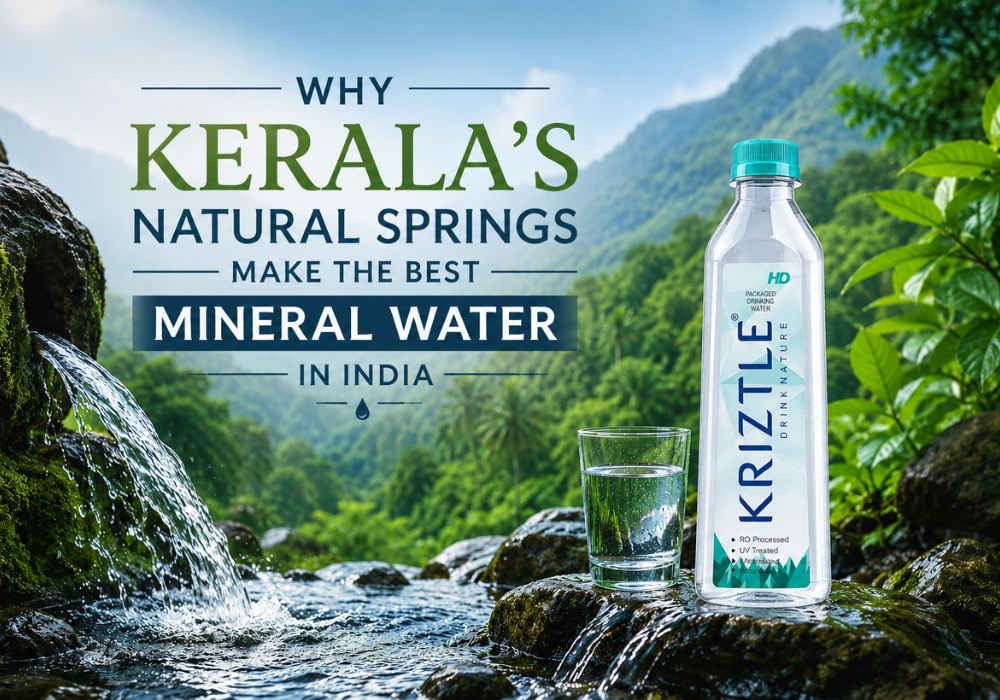
It is only when we compare regular drinking water to the clean natural mineral water that the need for pure drinking water becomes apparent. Even though there are many places in India where bottled water is manufactured, the unique status of providing naturally pure water is achieved by the state of Kerala.
But what makes Kerala different?
The solution is found underground. The special topography, heavy rains, forests, and the magnificent Western Ghats of Kerala make up the perfect combination for water to be naturally purified and enriched well before even being bottled. This natural benefit helps give mineral water in Kerala an edge over others.
This article aims to look into the reasons for the quality of mineral water in the natural springs of Kerala, the role of nature in keeping it clean, and also some of the points that need to be considered while buying it.
The Natural Advantage of Kerala
It is often referred to as “God’s own country” owing to its beautiful scenery, but besides that there is another aspect to these lands. They actually contribute to the production of quality water from nature.
Several natural factors work together:
- Heavy annual rainfall
- Abundant forest ecosystems
- Western Ghats mountain chain
- Natural underground aquifers
- Mineral-laden rock formations
When the precipitation percolates through various layers of rock and soil, it gets purified by natural filtration, absorbing the good minerals in its passage.
In contrast to chemically treated water, this geological phenomenon takes years to develop, producing balanced water.
How Natural Springs Filter Water
Many people assume spring water simply comes from a mountain. In reality, the journey is much more fascinating.
Step 1: Rainfall
It rains heavily in Kerala. It does not flow directly into the river but rather filters through the ground.
Step 2: Natural Underground Filtration
As water moves through multiple layers of:
- Sand
- Gravel
- Clay
- Rock formations
many suspended particles and impurities are naturally filtered out.
Step 3: Mineral Absorption
In this underground process, water will dissolve some naturally existing minerals like:
- Calcium
- Magnesium
- Potassium
- Bicarbonates
These minerals play a crucial part in the composition of mineral water.
Step 4: Collection at the Source
Responsible mineral water companies carefully collect water from protected sources while maintaining strict quality standards before bottling.
Importance of Minerals
Use of the word “mineral” in the phrase mineral water is not merely a marketing ploy.
Minerals occurring naturally in water have an impact on various properties of drinking water.
Improved Taste
Proper mineral balance provides water with a fresh, clear taste, without the flatness.
Electrolyte Balance
Magnesium and other minerals aid in maintaining natural body processes and proper hydration.
Hydration
Although mineral water does not substitute a balanced diet, naturally occurring minerals help achieve hydration throughout the day.
This is one of the reasons why people often find that natural water tastes noticeably better than purified water where almost all minerals have been stripped away.
Role of the Western Ghats
Western Ghats is one of the world’s most significant biodiversity hotspots and plays an important part in the water quality of Kerala.
This mountainous ecosystem functions as a natural water reserve in that it:
- Collects rains during monsoons
- Preserves underground water sources
- Ensures the health of the aquifer
- Prevents soil pollution
- Facilitates natural water recharging
Healthy forests also reduce erosion, helping preserve water quality before it enters underground storage.
Without these ecosystems, Kerala’s exceptional water resources would not exist.
Natural Mineral Water vs Purified Drinking Water
Many consumers use these terms interchangeably, but they are different.
| Natural Mineral Water | Purified Drinking Water |
|---|---|
| Naturally sourced | Can originate from various water sources |
| Contains naturally occurring minerals | Minerals may be removed during purification |
| Minimal treatment allowed under regulations | Undergoes extensive purification processes |
| Taste depends on natural mineral composition | Taste is often neutral |
Both can be safe when produced according to regulatory standards, but natural mineral water offers the additional benefit of retaining naturally occurring minerals.
Why Source Protection Matters
The quality of bottled water starts long before bottling.
A well-managed mineral water company protects its source by:
- Restricting nearby industrial activities
- Regularly monitoring groundwater quality
- Preventing contamination
- Conserving surrounding ecosystems
- Following sustainable extraction practices
Protecting the source is often more effective than trying to remove contaminants later.
Quality Standards That Consumers Should Look For
Choosing bottled water shouldn’t be based on packaging alone.
Look for products that follow recognized quality standards, including:
- BIS certification
- Food safety compliance
- Hygienic bottling practices
- Batch quality testing
- Clearly printed manufacturing and expiry dates
Reliable manufacturers perform multiple quality checks throughout production to ensure consistent safety and purity.
Common Misconceptions About Mineral Water
Myth 1: All bottled water is mineral water.
Not true.
Some bottled water is purified drinking water, while natural mineral water comes from protected underground sources with naturally occurring minerals.
Myth 2: More minerals always mean better water.
Not necessarily.
Good mineral water contains a balanced mineral composition rather than excessively high concentrations.
Myth 3: Mineral water doesn’t need quality testing.
Incorrect.
Even naturally pure water must undergo rigorous testing to ensure it meets safety standards before reaching consumers.
Sustainability Makes a Difference
Consumers increasingly want products that are both healthy and environmentally responsible.
Responsible water companies contribute by:
- Managing groundwater sustainably
- Protecting recharge zones
- Using efficient bottling practices
- Reducing waste during production
- Encouraging recycling of plastic bottles
Sustainability helps preserve natural water sources for future generations.
Why Kerala Continues to Lead in Premium Mineral Water
Several factors combine to make Kerala an ideal location for producing high-quality mineral water:
Exceptional Rainfall
Consistent rainfall replenishes underground aquifers naturally.
Rich Geological Formations
Natural rock layers enrich water with essential minerals.
Protected Forest Ecosystems
Healthy forests safeguard groundwater quality.
Modern Quality Control
Advanced bottling facilities maintain hygiene without compromising natural quality.
Consumer Trust
Kerala-based water brands have built strong reputations by prioritizing purity, consistency, and quality.
Expert Tips for Choosing Quality Mineral Water
When buying bottled water, keep these practical tips in mind:
- Choose trusted brands with transparent quality practices.
- Check for BIS certification.
- Ensure the bottle seal is intact.
- Read the manufacturing date.
- Store bottles away from direct sunlight.
- Avoid damaged or leaking bottles.
- Purchase from reliable retailers.
These simple checks can help ensure you’re choosing safe, high-quality drinking water.
The Importance of Water Quality Every Single Day
Water influences almost every single process inside the body.
Be it your professional work, sports activities, travelling, or even spending time outside in nature – the quality of the water you consume is as important as the amount of it you consume.
Opting for naturally filtered mineral water means getting an opportunity to drink water that was filtered naturally long before any quality control ensured its cleanliness.
This is the combination that is unique about Kerala’s mineral water.
Frequently Asked Questions
What makes mineral water from Kerala special?
There is an abundance of rainfall, protected forests, and Western Ghats in Kerala that produce groundwater with natural filtration properties, enriched with important minerals.
Which one is healthier – natural mineral water or normal bottled water?
Mineral water contains naturally occurring minerals such as calcium and magnesium. Both types of water – mineral and purified drinking water – can be healthy to consume, but mineral water has the advantage of being a natural source of minerals.
What minerals are commonly found in the mineral water of Kerala?
According to the source, the natural mineral water can have such minerals as calcium, magnesium, potassium, and bicarbonates, among others, in correct proportions.
How does natural mineral water differ from purified water?
Natural mineral water is obtained from the natural underground sources,while purified water has undergone a number of purification processes.
What are the ways of identifying good quality mineral water in bottles?
Identifying criteria include the BIS mark, hygienic packing, sealed bottles, labeling, and products from reputed manufacturing companies which maintain quality standards.
Conclusion
The natural environment of Kerala provides one of the best places to get excellent mineral water in India. With ample rain, safe forests, rich geology, and proper water management, there is nothing else you can ask for when it comes to mineral water.
But great mineral water is not all about nature. Sourcing, quality testing, sustainability, and safe bottling make all the difference in providing consumers with safe, fresh, and balanced mineral water.
When it comes to dependable mineral water in Kerala, then you should opt for the best local mineral water brands available in the market.